Believe it or not, a Christmas tree won't stay upright on its own. Instead, you need a stable Christmas tree stand that can accommodate the type and size of tree you have. We researched dozens of the best Christmas tree stands to help you find the right one for your needs, whether you have a real tree, an artificial tree, a small tree, or a behemoth. The stands in our guide have a track record of durability, performance, and easy setup. We also outline the size and type of tree each stand is meant for. Check out our guide to the best Christmas tree skirts once you've chosen the right stand for your tree. The best Christmas tree stands in 2022 Best Christmas tree stand overall: Krinner Tree Genie Christmas Tree Stand, available at Amazon, $82.79 The German-engineered Krinner Tree Genie Christmas Tree Stand is easy to set up in a couple of minutes and keeps trees up to 12 f...
Get link
Facebook
X
Pinterest
Email
Other Apps
Never Use Bleach on These Surfaces
Get link
Facebook
X
Pinterest
Email
Other Apps
Photo: Felipe Sanchez (Shutterstock)
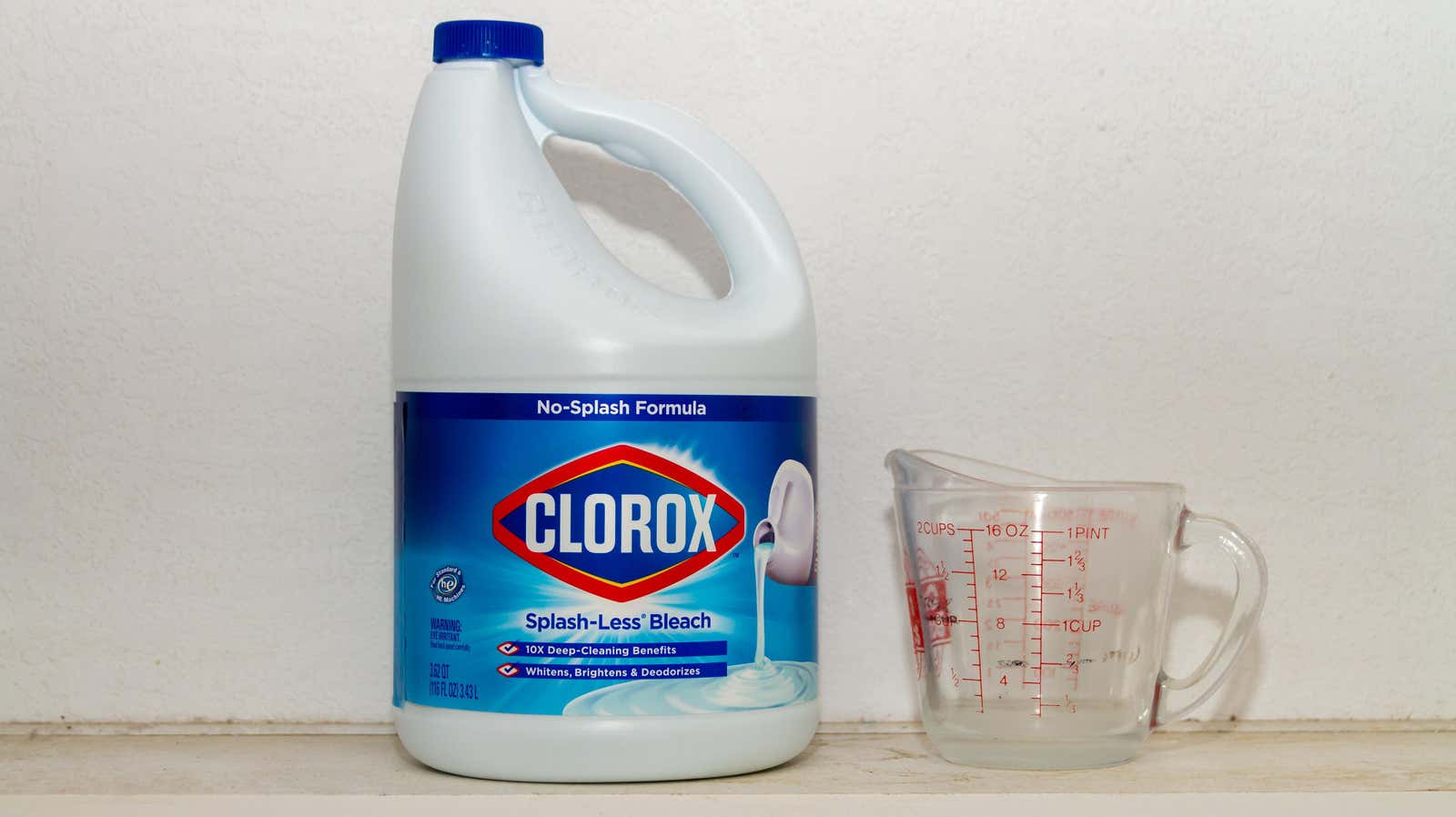
Bleach has a ton of uses outside of lifting stains from white clothes, but there are some dos and don’ts we should all remember. You already know to never mix bleach with any other cleaners or disinfectants, as it can release dangerous vapors, but there’s more that you should avoid.
What you can use bleach on
According to Architectural Digest, bleach can kill bacteria and pathogens left on surfaces after an initial cleaning. It’s not a cleaner itself, but works within 10 to 60 minutes of contact to kill what’s left behind after your first run-through with soap and water or another cleaning agent.
What you shouldn’t use bleach on
That said, there are some surfaces you should not bleach down:
Laminate
Stone
Marble
Granite
Quartz
Aluminum
Silver
Copper
Enamel (with chips in it)
Anything electronic
The reasons for avoiding bleach vary: For instance, bleach can eat away at the protective coating on laminate and damage the laminate paper beneath, or bleach can eat away the sealants on stone countertops, discoloring them. Basically, it’s too corrosive to be trusted on certain surfaces, but it’s fine on glazed ceramics, plastic cutting boards, painted wood, and the like. Since you need to leave bleach on surfaces for a while to really disinfect them, you can guess how this erosion might be a problem.
G/O Media may get a commission
You also shouldn’t try to clean grout with bleach, although you may read recommendations elsewhere that you should. Since grout so porous, bleach can really fade and erode it.
Dilute your bleach, but never with hot water
You may have heard that bleach should be diluted, but you may not know how much. According to the Centers for Disease Control and Prevention, you should first follow the instructions on the bottle you have, but if it doesn’t have instructions, use ⅓ cup of bleach per gallon of room-temperature water or four teaspoons per quart of room-temp water. Never dilute bleach with hot water, as this can allow some bleach to waft into the air with the steam, irritating your eyes and nose. Plus, hot water breaks down the bleach’s chemicals more quickly.
Even when diluting it just right, you should use bleach in rooms with good ventilation to avoid breathing the stuff in. Open your windows and doors. Wear gloves and protective materials, too, as well as old clothes you wouldn’t mind getting a bleach stain. (You can always turn them into cool tie-dye after a mishap, though.)
I recently watched “ the greatest film of all time ,” and the most boring one. In retrospect, the title alone should have been a sufficient warning: Jeanne Dielman, 23 Quai du Commerce, 1080 Bruxelles . Alas, I’m old enough to be a bit nostalgic about massive telephone address books. And massive it is. Clocking over 200 minutes, Chantal Akerman's 1975 dreary drama follows three days in the monotonous routine of Jeanne, a widow, a mother, and a prostitute. I watched Jeanne’s autopilot existence, until, staring at her back as she washes dishes, I decided to fast-forward a couple of minutes, only to discover she was still at it. And Jeanne is equally thorough when she’s busy baking, cleaning, folding laundry, or shining her son’s shoes. She speaks so scarcely and mechanically, that it’s impossible to detect any emotion or volition beyond her carefully controlled chores . Watching Jeanne Dielman is what the word “painstaking” was invented for. Chantal...
Stored procedures: like functions for your SQL. A stored procedure is a batch of SQL statements created and stored on a database. You can reuse a stored procedure over and over again. A stored procedure can accept parameters, run a query, and return results. Many users can call a stored procedure and different applications can call it with different parameter values. What Are the Benefits of Using Stored Procedures? Apart from allowing multiple users and applications to reuse it, a stored procedure has other benefits. It is easy to modify. You can change a stored procedure when necessary and these updates will be reflected for all users. Furthermore, you don’t need to redeploy your application when you modify the stored procedure. It reduces network traffic because the server only passes the procedure’s name over the network and not the entire query. It improves database security since users don’t have direct access to tables. To make...
Believe it or not, a Christmas tree won't stay upright on its own. Instead, you need a stable Christmas tree stand that can accommodate the type and size of tree you have. We researched dozens of the best Christmas tree stands to help you find the right one for your needs, whether you have a real tree, an artificial tree, a small tree, or a behemoth. The stands in our guide have a track record of durability, performance, and easy setup. We also outline the size and type of tree each stand is meant for. Check out our guide to the best Christmas tree skirts once you've chosen the right stand for your tree. The best Christmas tree stands in 2022 Best Christmas tree stand overall: Krinner Tree Genie Christmas Tree Stand, available at Amazon, $82.79 The German-engineered Krinner Tree Genie Christmas Tree Stand is easy to set up in a couple of minutes and keeps trees up to 12 f...




Comments
Post a Comment