Believe it or not, a Christmas tree won't stay upright on its own. Instead, you need a stable Christmas tree stand that can accommodate the type and size of tree you have. We researched dozens of the best Christmas tree stands to help you find the right one for your needs, whether you have a real tree, an artificial tree, a small tree, or a behemoth. The stands in our guide have a track record of durability, performance, and easy setup. We also outline the size and type of tree each stand is meant for. Check out our guide to the best Christmas tree skirts once you've chosen the right stand for your tree. The best Christmas tree stands in 2022 Best Christmas tree stand overall: Krinner Tree Genie Christmas Tree Stand, available at Amazon, $82.79 The German-engineered Krinner Tree Genie Christmas Tree Stand is easy to set up in a couple of minutes and keeps trees up to 12 f...
Get link
Facebook
X
Pinterest
Email
Other Apps
What to Do When You Can't Feel a Muscle Working
Get link
Facebook
X
Pinterest
Email
Other Apps
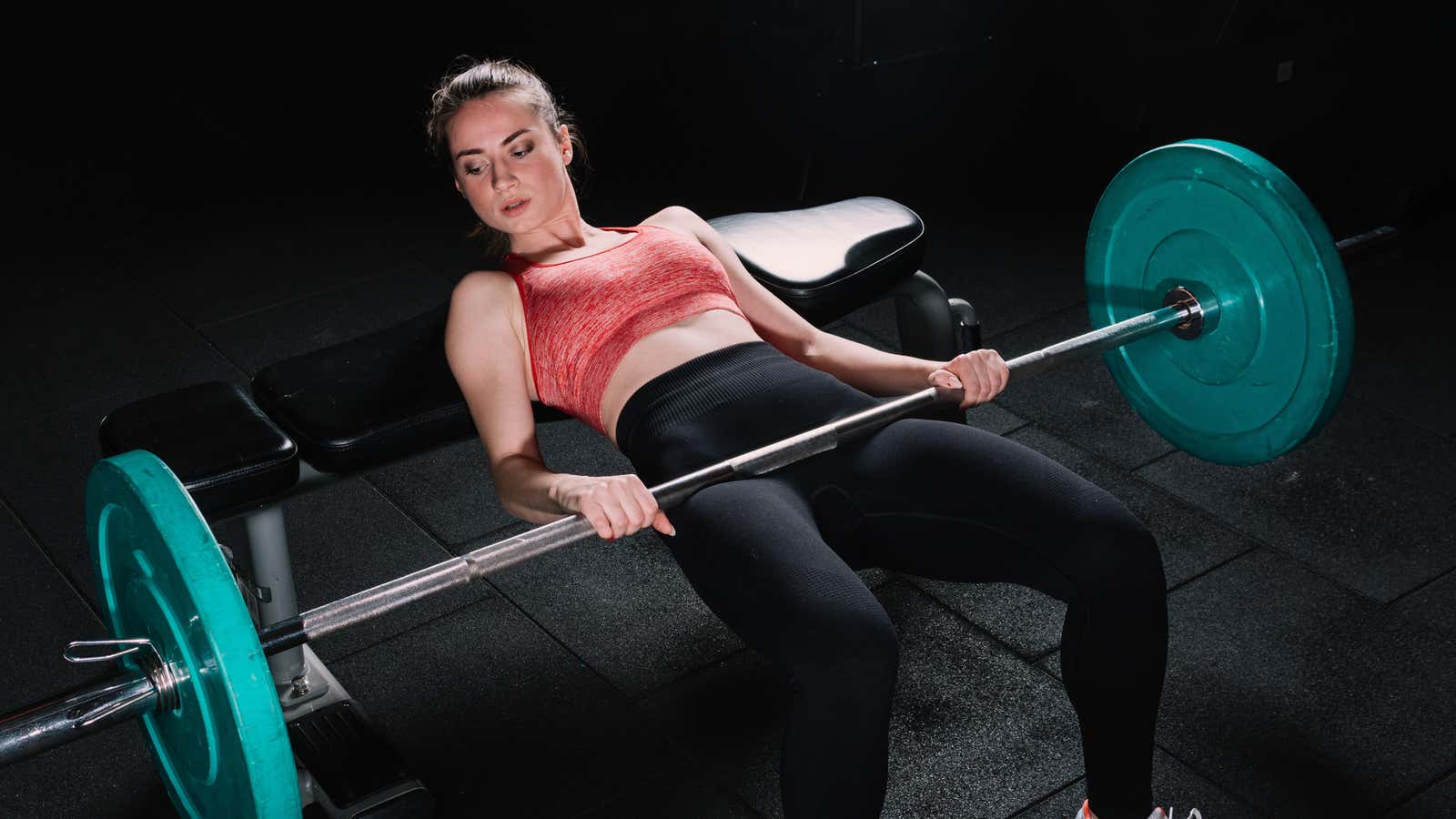
Photo: platinumArt (Shutterstock)
We lift to grow and strengthen our muscles, so it’s natural that a lot of us find bodybuilders’ piece-by-piece mindset appealing: You focus on the specific muscle that you want to work, and make sure that you feel it working.
But what happens if you do a glute exercise but you don’t feel it in your butt? Or you do a lat pulldown but you only feel it in your biceps? Here’s a guide.
You may not always feel a muscle, even if it’s working
Here’s the most important thing to know: you don’t have to feel a muscle for it to be working. Say you’re doing a pullup: Your lats are working whether you feel them or not. The lats are the upper back muscles that bring your arms closer to your torso, so a pullup simply cannot happen unless your lats are getting engaged.
Or take squats. A barbell squat works your quads, your glutes, and a lot of other muscles besides. But when you’re doing a heavy squat, your brain is processing a lot of information. It’s feeling the weight of the bar on your back. It’s remembering the technique cues that you’re trying to focus on. It’s paying attention to your balance as you descend to make sure you don’t tip over one way or another. It’s counting the number of the rep in your head. Maybe sometimes a muscle manages to pipe up with “hey, I’m your quads and I’m kind of hurting right now.” But your brain does not have time to listen to every muscle’s nonsense, any more than a mom making dinner has time to listen to her toddler’s every whine. It is busy making sure you complete the rep.
I like to think of some muscles as being “louder” than others. If I’m doing kettlebell swings, I might be more focused on the fact that my forearms are burning (from holding onto the kettlebell) and not feel my glutes working at all. But after 100 swings, hoo boy, you can bet my butt will be feeling like jelly afterward. It just didn’t give me that burning sensation in the moment.
G/O Media may get a commission
health
The Lyma Supplement
10 ingredients. One super-supplement. Lyma makes the next generation of supplements—peer-reviewed and formulated to unlock your potential.
When it matters whether you feel the burn, and when it doesn’t
So what should you do if you don’t feel the muscle working? You look for another way to be sure the muscle is working. In the case of the compound exercises mentioned above, the fact that you completed the exercise is all the information you need. Your pullups used your lats. Your kettlebell swings and your squats used your glutes. There’s simply no way around that.
Does it ever matter whether you’re feeling the muscle? Yes, it can help if you’re doing isolation exercises. In these exercises, like a bicep curl or a leg extension, you’re trying to focus a movement on one muscle or a small muscle group.
For example, let’s say you’re doing side-lying leg raises to work your hip adductors, and especially your glutes. If you have your legs angled slightly forward, you may feel the muscles toward the front of your hips working. But if you do the same exercise with your back to a wall, sliding your heel along the wall as your lift your leg, you’ll feel it a lot more in that glute you’re trying to isolate.
As a general rule, for compound exercises (where many muscles are working at once), it doesn’t matter whether you feel the muscle. But if you are doing an isolation exercise, feeling the muscle is helpful feedback to make sure that you are isolating the right muscle.
What not to do
There’s a lot of bad advice out there, and I’d like to call out one thing specifically: the advice to reduce the amount of weight you’re lifting so that you can feel the muscles better. Sometimes people will say it’s important to build a “mind-muscle connection.”
But you don’t have to forgo weight the bar to build that connection. If you’d like to spend more time feeling the muscle, do some isolation work in your warmups. (These are sometimes called “activation” exercises.) You can also do extra isolation work at the end of your workout just to give those specific muscles a little more volume.
It’s important to remember that different parts of your workout have different purposes. If you’re squatting heavy, you need to put some fucking weight on the bar to keep building your strength and your skill at squatting. Often the lifts that make it hardest to feel a muscle are the lifts where that muscle is working the most! So don’t give up on heavy, effective lifts just because you don’t “feel” them as well as isolations or warmups.
Believe it or not, a Christmas tree won't stay upright on its own. Instead, you need a stable Christmas tree stand that can accommodate the type and size of tree you have. We researched dozens of the best Christmas tree stands to help you find the right one for your needs, whether you have a real tree, an artificial tree, a small tree, or a behemoth. The stands in our guide have a track record of durability, performance, and easy setup. We also outline the size and type of tree each stand is meant for. Check out our guide to the best Christmas tree skirts once you've chosen the right stand for your tree. The best Christmas tree stands in 2022 Best Christmas tree stand overall: Krinner Tree Genie Christmas Tree Stand, available at Amazon, $82.79 The German-engineered Krinner Tree Genie Christmas Tree Stand is easy to set up in a couple of minutes and keeps trees up to 12 f...
Stored procedures: like functions for your SQL. A stored procedure is a batch of SQL statements created and stored on a database. You can reuse a stored procedure over and over again. A stored procedure can accept parameters, run a query, and return results. Many users can call a stored procedure and different applications can call it with different parameter values. What Are the Benefits of Using Stored Procedures? Apart from allowing multiple users and applications to reuse it, a stored procedure has other benefits. It is easy to modify. You can change a stored procedure when necessary and these updates will be reflected for all users. Furthermore, you don’t need to redeploy your application when you modify the stored procedure. It reduces network traffic because the server only passes the procedure’s name over the network and not the entire query. It improves database security since users don’t have direct access to tables. To make...
I recently watched “ the greatest film of all time ,” and the most boring one. In retrospect, the title alone should have been a sufficient warning: Jeanne Dielman, 23 Quai du Commerce, 1080 Bruxelles . Alas, I’m old enough to be a bit nostalgic about massive telephone address books. And massive it is. Clocking over 200 minutes, Chantal Akerman's 1975 dreary drama follows three days in the monotonous routine of Jeanne, a widow, a mother, and a prostitute. I watched Jeanne’s autopilot existence, until, staring at her back as she washes dishes, I decided to fast-forward a couple of minutes, only to discover she was still at it. And Jeanne is equally thorough when she’s busy baking, cleaning, folding laundry, or shining her son’s shoes. She speaks so scarcely and mechanically, that it’s impossible to detect any emotion or volition beyond her carefully controlled chores . Watching Jeanne Dielman is what the word “painstaking” was invented for. Chantal...





Comments
Post a Comment