Believe it or not, a Christmas tree won't stay upright on its own. Instead, you need a stable Christmas tree stand that can accommodate the type and size of tree you have. We researched dozens of the best Christmas tree stands to help you find the right one for your needs, whether you have a real tree, an artificial tree, a small tree, or a behemoth. The stands in our guide have a track record of durability, performance, and easy setup. We also outline the size and type of tree each stand is meant for. Check out our guide to the best Christmas tree skirts once you've chosen the right stand for your tree. The best Christmas tree stands in 2022 Best Christmas tree stand overall: Krinner Tree Genie Christmas Tree Stand, available at Amazon, $82.79 The German-engineered Krinner Tree Genie Christmas Tree Stand is easy to set up in a couple of minutes and keeps trees up to 12 f...
Get link
Facebook
X
Pinterest
Email
Other Apps
Potatoes Are Healthy, Actually
Get link
Facebook
X
Pinterest
Email
Other Apps
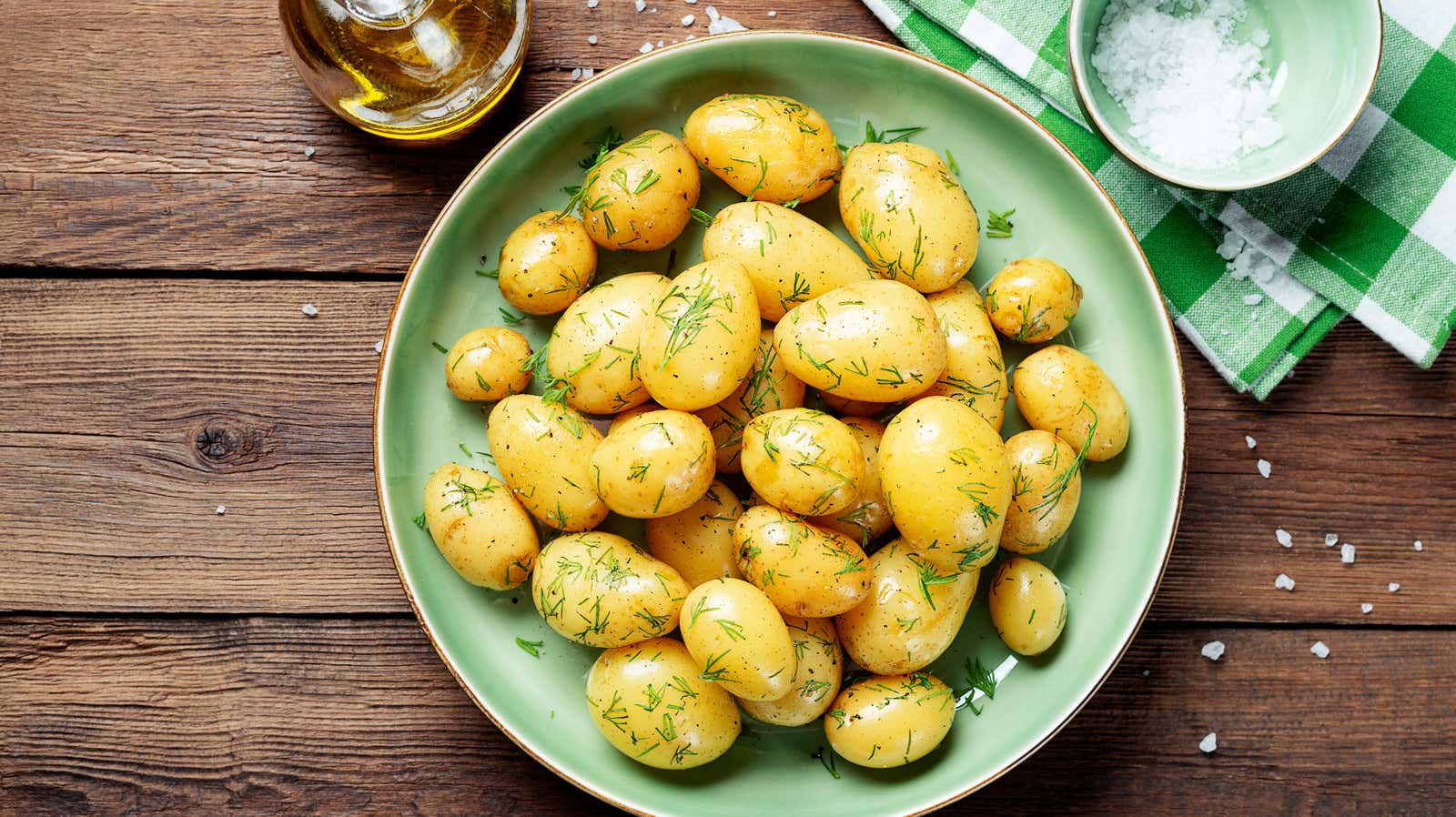
Photo: nelea33 (Shutterstock)
Potatoes have been saddled with a reputation of being “unhealthy,” and it’s unfair. The potato is just a lump of mostly starch (and a surprising amount of vitamin C) that grows in the ground. It’s as down-to-earth as a vegetable can get—literally. Sure, we can fry it in oil and call it a chip, but that’s hardly the potato’s fault. So why do so many of us think of potatoes as incompatible with a healthy diet?
How did we start thinking of potatoes as unhealthy, anyway?
One of the sadder statistics from the USDA’s surveys of our eating habits is that potatoes are the most commonly consumed vegetable in America. That’s not sad because they are potatoes, but rather because so many of us eat them in the form of potato chips and French fries and then don’t eat many other vegetables. A diet devoid of green veggies is a problem because it’s missing green veggies, not because it has potatoes in it.
A variety of observational studies have related potato consumption to increased levels of type 2 diabetes and other health outcomes, but potatoes are more likely to be a marker of an otherwise unhealthy diet (for example, signaling that someone eats a lot of fast food) than a problem in themselves. A recent study from Denmark that separated boiled potatoes from fried found that the former aren’t linked to diabetes risk. And even though potatoes have a high glycemic index on paper, research has shown that they don’t spike blood glucose in the context of a typical meal.
Fries and chips also have a bad reputation, dating from the days when fats and oils were considered the bugbear of healthy eating. They’re fried in fatty oil (or, in the olden days, beef tallow) and thus have been deemed “unhealthy.” When carbs became a trendy thing to avoid, fries and chips were still considered unhealthy—but this time because potatoes are high in carbs.
G/O Media may get a commission
Even though the low-carb craze has faded, potatoes are still seen as a poor choice. Or people will eat sweet potatoes instead of white potatoes, even though they’re nutritionally not that different. We need to get our understanding straight.
What’s actually in a potato, nutrition wise
What’s so bad about potatoes, anyway? If you take a minute to consider them as a vegetable, separate from their common chip and French-fry preparations, they’re actually pretty good. A large potato (284 calories’ worth) contains:
64 grams of carbs—okay, but stay with me here
8 grams of protein
8 grams of fiber
less than 1 gram of fat
81% of your daily value in vitamin C(!)
64% of your daily vitamin B6
33% of your daily potassium
These numbers assume you’re keeping the skin on. Potatoes’ flesh still has plenty of the above nutrients, but you’ll get more of them if you include the skin. (I always keep the skin on when I mash or roast potatoes.)
the figures for protein, fat, and vitamins are pretty impressive for a vegetable, and even more so when you think of them as a source of carbs: A potato has more fiber and protein than an equivalent serving of brown rice, and more fiber (but similar protein) compared to quinoa.
So stop lumping potatoes in with white bread or other refined carbohydrate sources. Nutritionally they are more like quinoa, brown rice, or other whole grains.
I recently watched “ the greatest film of all time ,” and the most boring one. In retrospect, the title alone should have been a sufficient warning: Jeanne Dielman, 23 Quai du Commerce, 1080 Bruxelles . Alas, I’m old enough to be a bit nostalgic about massive telephone address books. And massive it is. Clocking over 200 minutes, Chantal Akerman's 1975 dreary drama follows three days in the monotonous routine of Jeanne, a widow, a mother, and a prostitute. I watched Jeanne’s autopilot existence, until, staring at her back as she washes dishes, I decided to fast-forward a couple of minutes, only to discover she was still at it. And Jeanne is equally thorough when she’s busy baking, cleaning, folding laundry, or shining her son’s shoes. She speaks so scarcely and mechanically, that it’s impossible to detect any emotion or volition beyond her carefully controlled chores . Watching Jeanne Dielman is what the word “painstaking” was invented for. Chantal...
Stored procedures: like functions for your SQL. A stored procedure is a batch of SQL statements created and stored on a database. You can reuse a stored procedure over and over again. A stored procedure can accept parameters, run a query, and return results. Many users can call a stored procedure and different applications can call it with different parameter values. What Are the Benefits of Using Stored Procedures? Apart from allowing multiple users and applications to reuse it, a stored procedure has other benefits. It is easy to modify. You can change a stored procedure when necessary and these updates will be reflected for all users. Furthermore, you don’t need to redeploy your application when you modify the stored procedure. It reduces network traffic because the server only passes the procedure’s name over the network and not the entire query. It improves database security since users don’t have direct access to tables. To make...
Believe it or not, a Christmas tree won't stay upright on its own. Instead, you need a stable Christmas tree stand that can accommodate the type and size of tree you have. We researched dozens of the best Christmas tree stands to help you find the right one for your needs, whether you have a real tree, an artificial tree, a small tree, or a behemoth. The stands in our guide have a track record of durability, performance, and easy setup. We also outline the size and type of tree each stand is meant for. Check out our guide to the best Christmas tree skirts once you've chosen the right stand for your tree. The best Christmas tree stands in 2022 Best Christmas tree stand overall: Krinner Tree Genie Christmas Tree Stand, available at Amazon, $82.79 The German-engineered Krinner Tree Genie Christmas Tree Stand is easy to set up in a couple of minutes and keeps trees up to 12 f...




Comments
Post a Comment